
There are various physical sun protection solutions suitable for seaside scenarios. Professional sun-protective garments can shield the whole body from strong sunlight effectively. UVA in ultraviolet rays has strong penetrating power. It can pass through clouds and glass and reach the dermis of the skin. Long-term exposure will cause dull skin, accelerate aging and form fine lines. Hence, sunscreen cosmetics are always essential products in the beauty industry.
Today, Alan Angel introduces the raw material formula and complete production process of sunscreens for beauty brand owners and global buyers.
Core Sunscreen Ingredients
The functional ingredients of sunscreen are UV filters, divided into physical and chemical types. Physical filters such as zinc oxide and titanium dioxide work by reflecting and scattering UV rays. Chemical UV filters absorb ultraviolet radiation to achieve protection. Most mainstream sunscreens combine both types of filters to realize full-spectrum UV defense.
Raw Material Blending
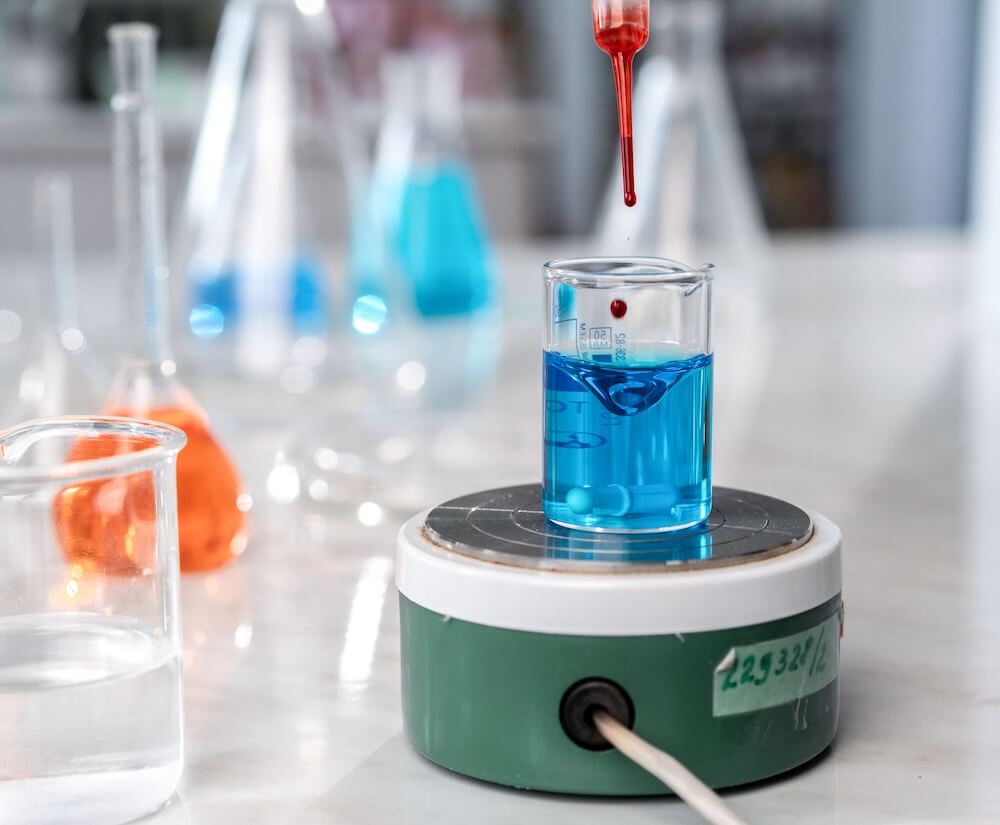
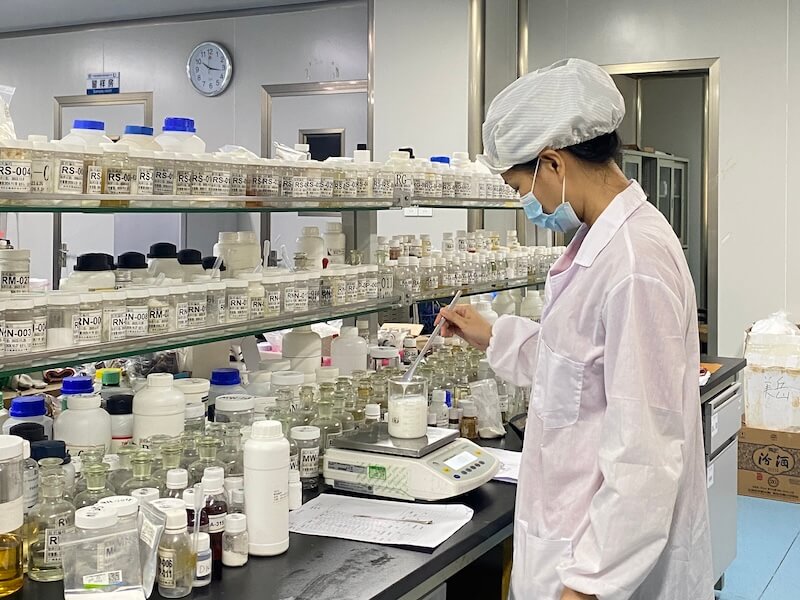
All new formulas are developed and tested in laboratories. Most commercial sunscreens adopt compound formulas with physical and chemical UV filters to enhance overall sun protection. We first blend different UV filters in precise proportions to establish basic protective performance.
Oil-water System & Emulsification Technology
Most UV filters are dissolved in oil phase, so sunscreens are prone to oil-water separation after long-term storage, which is a key technical challenge in formula development and production.
To create a comfortable texture, purified water is added to adjust the formula. Since oil and water cannot mix naturally, emulsifiers are required for emulsification. We first add emulsifiers into water, then mix with oil phase dissolved with UV filters. UV filters account for 10% to 30% of the total formula. Evenly emulsifying high-concentration raw materials requires sophisticated formula technology.
Stirring & Cooling for Samples
After raw material mixing, the mixture is fully stirred and cooled to make trial sunscreen samples. Emulsification can only keep oil and water mixed temporarily. Poor processing will lead to separation and weaken sun protection effects.
Quality Inspection
All samples go through strict quality tests. Viscosity testing ensures a lightweight and fresh texture for summer use. A proper amount of alcohol can be added to bring a cooling feeling. PH value test is carried out to guarantee mild performance for all skin types. Finally, professional UV spectrometers detect UV absorption capacity and confirm the official SPF value. Simple self-test methods online are not accurate enough.
Mass Production
Once the laboratory formula is finalized, mass production will start in the factory. The whole production cycle lasts about 5 to 7 hours. During production, oil phase and water phase materials are heated to specific temperatures separately, then transported and mixed via negative pressure pipelines.
The emulsifying device runs at 2500 revolutions per minute to ensure thorough fusion. The finished semi-products are cooled down to 20℃, then delivered to the filling workshop by negative pressure pumps.
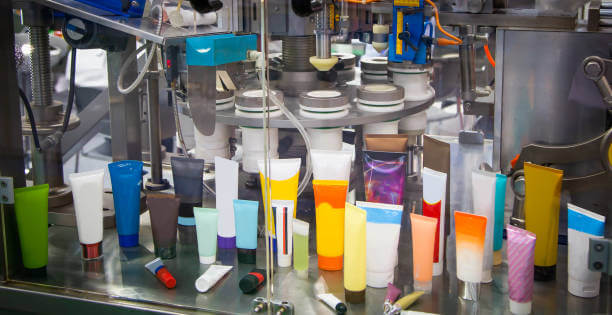
Filling & Capping
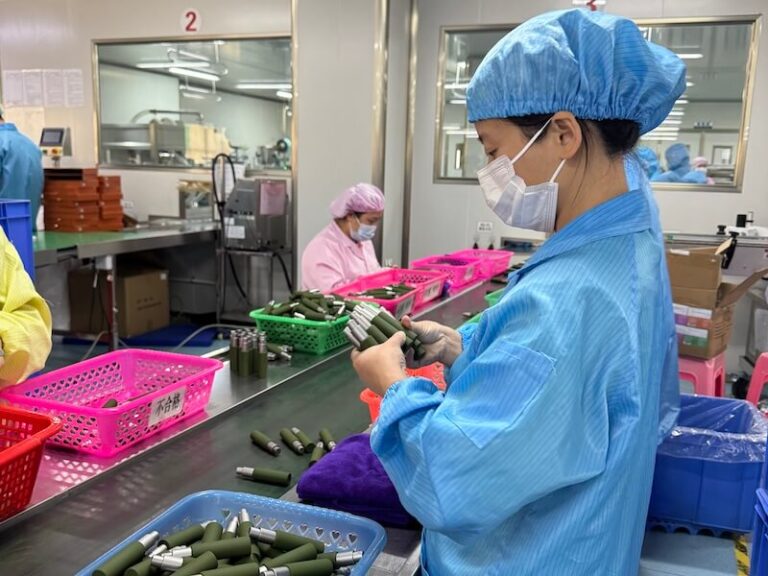
Automatic equipment fills sunscreen into containers with fixed volume, then tightens bottle caps to finish the whole production process.
Every procedure from formula research to mass production aims to deliver high-quality sunscreens. As a reliable cosmetic manufacturer, Alan Angel provides professional OEM & ODM services and bulk supply for sunscreen series. We welcome global partners for business cooperation.